
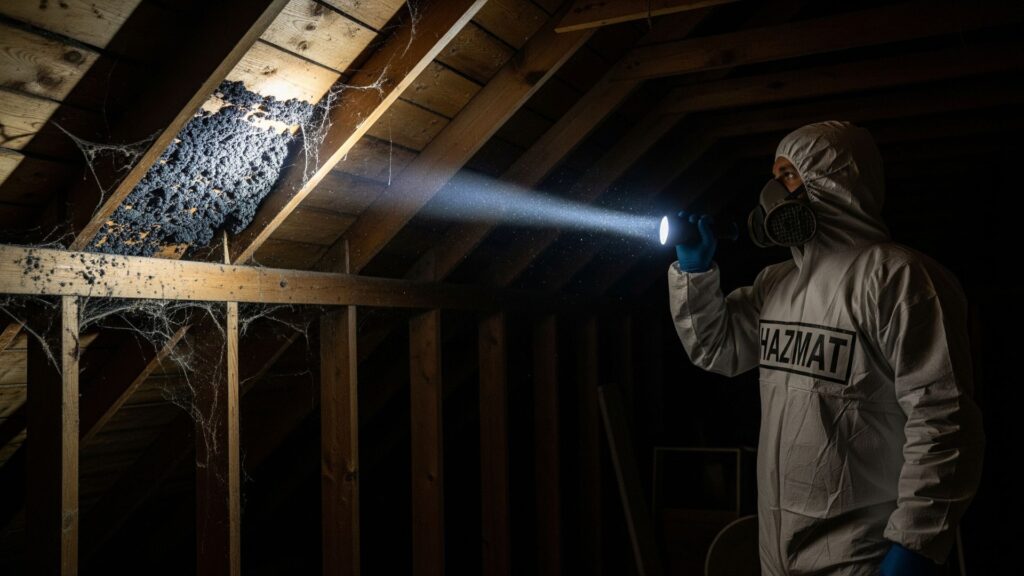
Most mold problems do not start where people see them. They start where moisture sits out of sight, and few places in a Los Angeles home stay hidden longer than the crawlspace. Out of sight becomes out of mind, and a damp crawlspace can feed mold growth for years before anyone notices a musty smell upstairs.
How a Crawlspace Turns Into a Mold Engine
Crawlspaces usually combine exposed soil with limited airflow and a steady supply of organic material, which is everything mold needs once moisture arrives. The moisture comes from more than one direction. Concrete is porous, so groundwater migrates up through the slab and raises humidity. On hillside lots, water from higher ground presses against the foundation and seeps in. A leaking HVAC condensate line or drain pan can quietly soak the framing for months.
Our own founder learned this in his own century old home. After a mold test came back high, he searched for the source and ended up in a crawlspace he did not even know existed. A leaking drain from one of the HVAC units had created a three foot square patch of mold under the house. If it can happen unnoticed to a mold professional, it can happen to any owner.
Why Crawlspace Mold Demands a Specific Process
Wood is organic, and mold burrows deep into beams and joists where surface cleaning cannot follow. We spray the affected wood with an antimicrobial to kill the growth, then physically wire brush it. Because the framing cannot simply be replaced, we then seal it with a specialized antimicrobial paint. That coating locks in any deep growth we could not remove and stops future spores from settling into the grain, which is a core part of our mold remediation process.
Stopping the Water for Good
Removing the mold without controlling the moisture is wasted effort. After we identify where the water is coming from, we often install a vapor barrier across the exposed soil to keep ground moisture from rising into the structure. Where humidity stays high, a dedicated fan and dehumidifier hold it at a safe level. On slopes with year round subsurface water, deep French drains direct that groundwater away from the foundation, where shallow surface drains cannot. It is far easier to guide water where you want it than to try to stop it.
Why This Matters for Owners and HOAs
Crawlspace and shared substructure moisture is a common source of recurring complaints in single family homes, multi unit buildings, condo associations, and commercial properties across Los Angeles. Addressing it properly protects the structure and the air quality of every unit above it. We verify our work with independent lab testing and back it with a one-year guarantee.
A crawlspace evaluation is part of a complete mold inspection, where we trace the moisture before recommending a plan.
If you own or manage property in the Los Angeles area, including the foothill communities around Pasadena and San Marino, call Mold Zero or book your free inspection today.