A commercial mold inspection is not something facilities managers schedule out of curiosity. It happens because something prompted it. A tenant filed a complaint, an odor showed up in a common area, a water event hit the building, or a lease renewal put the property under a microscope. Whatever the trigger, the purpose of a commercial mold inspection is always the same. It determines what is actually in the building, where the moisture is coming from, and what it will take to make the space healthy and defensible again.
Mold Zero performs commercial mold inspections for office buildings, retail spaces, medical offices, multi-unit residential properties, and HOA-managed communities across the Los Angeles area. The company is led by Rusty Tweed, who is NORMI-certified and BBB-accredited. He built the company’s inspection protocol under Florida’s strict state licensing regime before bringing it to California, where no comparable licensing exists.
What a Commercial Mold Inspection Covers
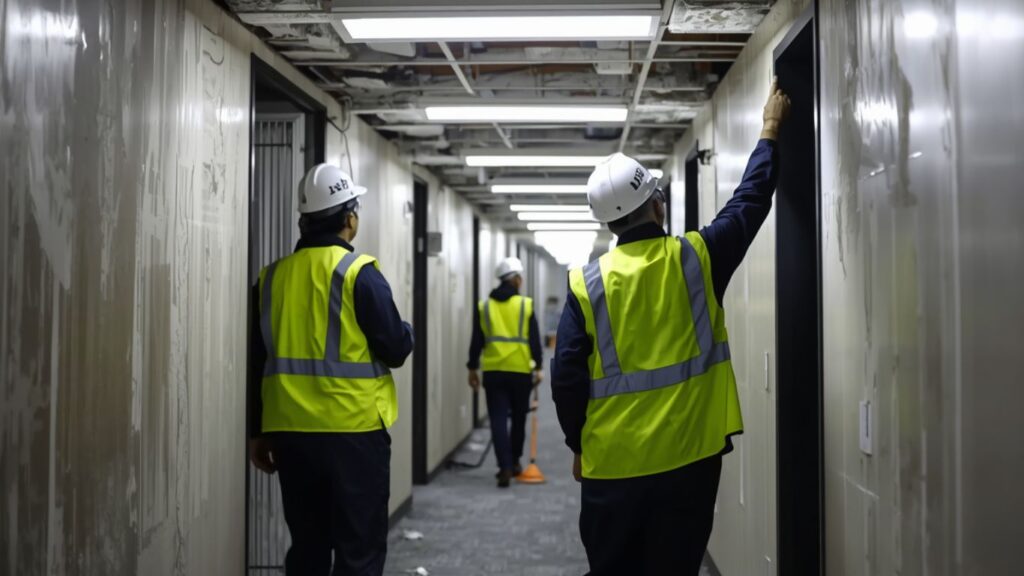
A real inspection is a systematic evaluation, not a walk-through with a flashlight. It examines the building’s moisture history, its current moisture readings, how the HVAC system moves air, and the biological evidence in the air and on surfaces. The inspector starts by documenting what has happened in the building. Past leaks, prior remediation, HVAC service history, and any pattern in tenant complaints all shape where the search focuses. A slow roof leak that has been active for two years calls for a very different search than a pipe that burst last week.
Moisture Mapping Finds the Source, Not Just the Stain
Moisture is the one thing mold cannot live without, so finding it is the heart of the inspection. Our inspectors use professional moisture meters to read walls, floors, ceilings, and structural elements. The meter reveals water inside materials that look completely dry on the surface. This matters more in Los Angeles than most building owners expect. We have opened walls in LA properties six months after a rain event and found the cavity still wet, because a sealed commercial building with little internal air movement does not dry out the way people assume a desert climate would.
Mold also follows gradients. It moves along paths of temperature, humidity, and air pressure, which means a colony in one part of a building usually has spores already seeded in the neighboring spaces that share those gradients. A commercial mold inspection maps those pathways instead of stopping at the first visible patch.
What the Lab Results Actually Tell You
When the inspection calls for sampling, Mold Zero sends air and surface samples to an independent third-party laboratory. We do not run our own lab, because independent analysis is the only version a tenant attorney or an insurance carrier will take seriously. The lab compares indoor spore counts against the outdoor baseline. A healthy building shows indoor levels at or below what is floating around outside.
The report also flags marker molds. Species like Stachybotrys and Chaetomium rarely appear indoors unless there has been sustained water damage, so their presence points to a real moisture problem rather than normal outdoor drift. Reading those markers correctly is the difference between a vague result and an actionable one, and it is where an experienced inspector earns their keep.
Why Commercial Buildings Get Inspected Too Late
In a commercial building, the mold that matters is usually the mold nobody can see. It grows above drop ceilings, inside mechanical rooms, in wall cavities, and within the HVAC system itself. By the time a tenant smells something or reports symptoms, the source has often been active for months. A commercial mold inspection exists to shorten that timeline. It catches the problem while it is still contained, rather than after it has spread through shared air to every tenant on the floor.
What You Receive
Every commercial mold inspection ends with a written report. It documents the moisture readings, the areas of concern, the lab findings when samples were taken, and a clear scope of work if remediation is needed. That report is built to stand up in the places commercial owners actually need it, from insurance claims to lease disputes to board decisions. If remediation is warranted, our commercial mold removal team can move quickly, and the same independent-lab standard is used to verify the building afterward. The EPA’s guidance on mold in commercial buildings treats this kind of assessment and documentation as the foundation of a defensible response.
Book Your Commercial Mold Inspection
If a building you own or manage in the Los Angeles area shows any sign of a mold or moisture problem, a commercial mold inspection is the right first step. It is faster and far less expensive than discovering the full extent during a claim or a sale. Call Mold Zero at (626) 671-8885 to schedule, or book online. You can also learn more about our full process on the mold inspection page.