Free Inspections Available for Residential and Commercial Properties Throughout Los Angeles County
Mold Zero is a NORMI-certified mold inspection company serving property owners, landlords, HOAs, and commercial facilities throughout Los Angeles County. Every inspection includes a thorough visual assessment and moisture mapping with professional-grade equipment. Where warranted, we send samples to an independent third-party laboratory analyzed by certified microbiologists, not an in-house lab we control. Rusty Tweed, Mold Zero’s founder, has personally managed thousands of mold inspection and remediation projects across California and Florida, including work under Florida’s strict state licensing requirements. Our findings come with a detailed written report, a full remediation scope when needed, and a 1-year guarantee on completed work.
If you own or manage property in the LA area and suspect a mold problem, the right first step is a professional inspection. It is not a bleach wipe-down and it is not a store-bought test kit. The inspection determines what is actually present, where it is coming from, and what it will take to fix it permanently. Schedule your free inspection today at (626) 671-8885.
Why Los Angeles Properties Need Professional Mold Inspections
Most property owners discover mold by accident. It shows up as a dark stain under a sink, a musty odor in a unit, or a tenant complaint that does not go away. The problem is that by the time mold becomes visible, it has usually been growing for weeks or months in places you cannot see. It hides behind drywall, under flooring, inside HVAC cavities, and in crawlspaces.
Los Angeles has its own mold profile, and it is not the mold-free desert most people assume. Homes on hillsides in the Hollywood Hills, Altadena, and the San Gabriel foothills face hydrostatic pressure from upslope groundwater migration year-round. Coastal properties in Santa Monica, El Segundo, and Long Beach deal with elevated ambient humidity that sits close to mold’s growth threshold. Because LA construction is tight and well sealed, water intrusion from a roof leak, a plumbing failure, or HVAC condensation does not dry out the way it would in a more ventilated structure. We have opened walls in Los Angeles properties six months after a rain event and found the interior still wet and actively growing mold.
A professional mold inspection does what a general home inspection cannot. It follows moisture, maps gradients, and identifies the source rather than just the visible surface evidence.

Signs Your Property Needs a Mold Inspection Now
Property owners and managers should treat the following as inspection triggers, not conditions to watch and see:
- Water stains on ceilings or walls, even if the originating leak has been repaired
- Musty or earthy odors in units, common areas, mechanical rooms, or crawlspaces
- Tenant complaints about air quality or recurring respiratory symptoms that improve when away from the property
- Recent plumbing leaks, roof leaks, HVAC condensate overflows, or appliance failures involving water
- Properties in hillside or coastal LA microclimates with seasonal or year-round moisture variation
- Prior remediation that did not hold, with mold returning within months of previous treatment
- Peeling paint, bubbling drywall, or buckling flooring, which often signal moisture behind surfaces
- Pre-purchase due diligence, because a standard home inspection does not include mold testing
If any of these conditions exist on a property you own or manage, the cost of an inspection is far less than the cost of discovering an advanced mold problem during a sale, a tenant dispute, or a failed re-remediation.

What Does a Professional Mold Inspection Include?
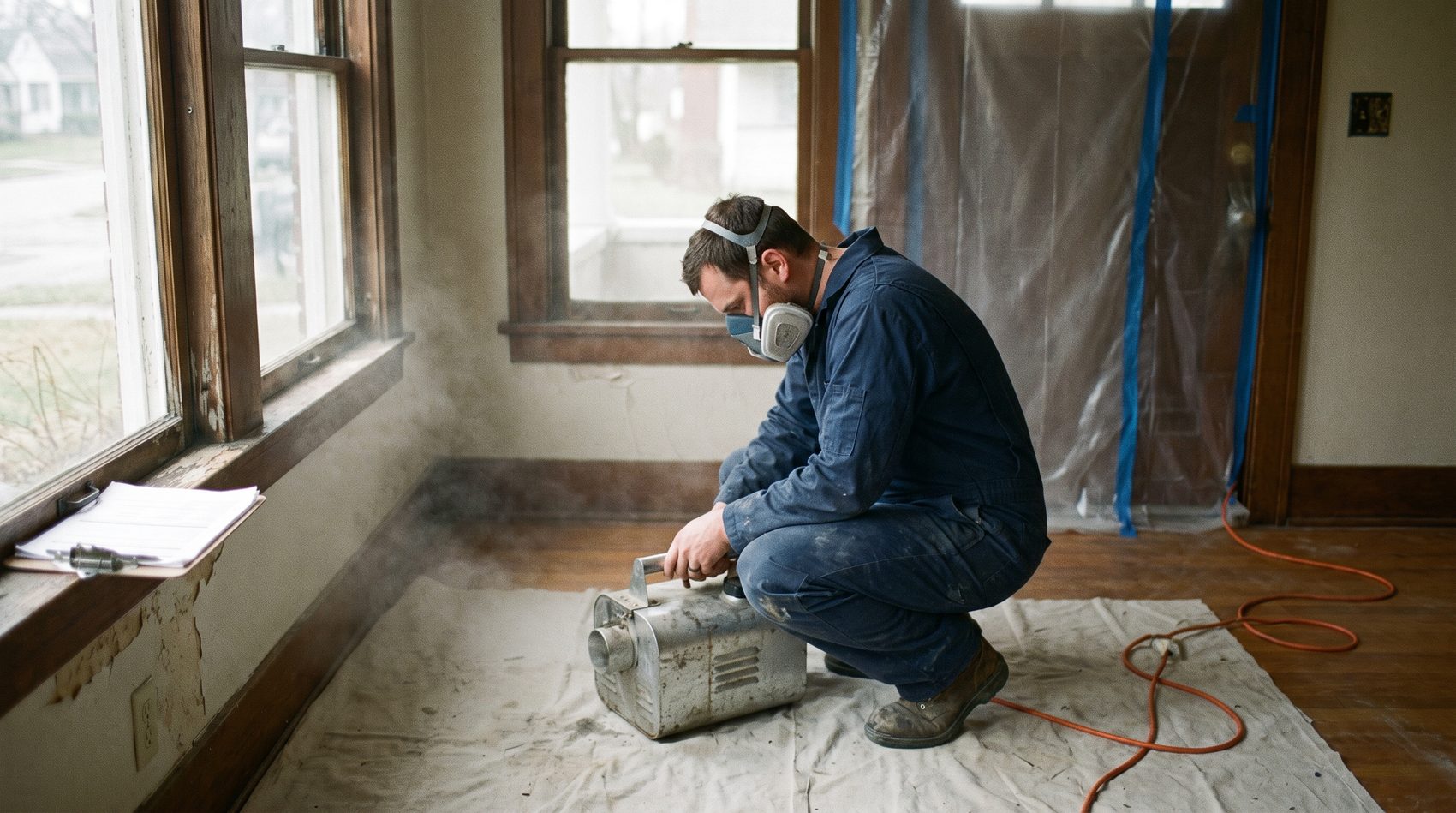
A proper mold inspection is not a walk-through with a flashlight. It is a systematic evaluation of your property’s moisture history, current conditions, airflow patterns, and biological content.
1. Pre-Inspection Client Interview
Before the inspector arrives, we document the property history. That covers known water intrusion events, prior remediation, HVAC service records, and tenant complaints. A slow roof leak that started two years ago calls for a different search pattern than a recent plumbing failure.
2. Moisture Mapping With Professional Equipment
Moisture is the only thing that makes mold possible, so finding it rather than guessing at it is the most important part of the inspection. Our inspectors use professional moisture meters to take readings at walls, floors, ceilings, and structural elements. A moisture meter reveals water content inside drywall, beneath flooring, and behind baseboards that the eye cannot see. In Los Angeles, this frequently reveals surprises, from elevated foundation-wall readings in hillside homes to damp wall cavities in coastal properties with no visible leak at all.
3. Full Visual Inspection of High-Risk Areas
Our inspectors know where mold hides because they have found it in every conceivable location. The visual inspection follows a room-by-room protocol rather than a glance at whatever is obviously visible. Particular attention goes to HVAC components, including evaporator coils, condensate drain pans, air handlers, ductwork, and return air cavities. A single colony anywhere in the air handling system means spores are being distributed to every room the HVAC serves. Rusty still recalls a job his team could not pass for clearance until he peeled back a section of nice wallpaper and found the wall black behind it. Mold favors the organic glue behind wallpaper, and that is exactly the kind of hidden growth a surface walk-through never catches.
4. Air and Surface Sampling When Warranted
When the inspection identifies suspect areas, or when a property needs documented baseline data for a sale or an insurance claim, we collect samples and submit them to an independent third-party laboratory. We do not run our own lab. Independent verification is the only way to guarantee results with no conflict of interest. Lab results identify the species present, separate normal outdoor background levels from indoor amplification, and flag marker molds such as Stachybotrys and Chaetomium that indicate active water damage.
5. Detailed Written Report and Remediation Scope
Every inspection ends with a written report that documents findings, moisture readings, areas of concern, and lab results if collected. Where remediation is indicated, the report includes a full scope of work with pricing. You will know exactly what is present, where it came from, and what it will take to fix it.

Mold Inspections for Commercial Properties, HOAs, and Multi-Unit Buildings
Mold in a commercial property, a multi-unit building, or an HOA-managed community carries a different risk profile than mold in a single-family home. Multiple occupants, shared HVAC systems, and liability exposure all raise the stakes. Mold Zero handles apartment buildings, HOA and condo associations, office and retail spaces, and medical and professional offices where air quality standards are especially critical. Commercial inspections follow the same independent-lab protocol and include documentation suitable for insurance carriers, attorneys, and tenant communications.
What Happens After Your Mold Inspection?
If the inspection finds no significant issue, you walk away with documented peace of mind and the specific conditions to monitor going forward. If mold or a high-risk moisture condition is found, the same inspector provides a full remediation scope and pricing, and remediation is typically scheduled within days. Our remediation process treats the whole property environment, because spores travel through HVAC systems and settle throughout a structure. Every remediation ends with post-remediation verification testing, using independent lab samples to confirm that mold levels are back within a normal range before we call the job complete. The work is backed by our 1-year guarantee.
Concerned About Black Mold on Your Property?
Stachybotrys chartarum, commonly called black mold, is among the most serious mold types found in water-damaged buildings. It produces potent mycotoxins and needs prolonged saturation of cellulose materials like drywall to establish, so its presence signals an unresolved or long-standing water intrusion. It rarely appears alone and is often accompanied by Chaetomium, another high-toxicity marker mold. Dark-colored mold is not automatically Stachybotrys, and proper lab analysis is the only way to know what you are dealing with. Mold Zero provides complimentary black mold inspections. If you suspect black mold on your property, contact us right away.
Mold Inspection Service Area
Mold Zero serves property owners throughout Los Angeles County and the greater metro area. That includes San Marino, Pasadena, Arcadia, Glendale, Burbank, Hollywood, Los Feliz, Silver Lake, Eagle Rock, Altadena, Monrovia, Temple City, Alhambra, and El Monte in the San Gabriel Valley. It also includes Long Beach, Torrance, and the South Bay, along with Santa Monica, Culver City, and the Westside, and hillside communities across the Santa Monica Mountains and the Verdugo Hills. We serve commercial clients across downtown Los Angeles, the mid-Wilshire corridor, and throughout the county. If your property is in the greater LA area and you are not sure whether we serve your location, call us. We very likely do.
Frequently Asked Questions
How much does a mold inspection cost?
Mold Zero offers free mold inspections for qualifying properties. Contact us to confirm availability and schedule. There is no obligation to proceed with remediation after an inspection.
How long does a mold inspection take?
Most residential inspections take one to three hours depending on property size and the complexity of the moisture situation. Commercial and multi-unit properties usually take longer. If lab samples are collected, results come back from the independent laboratory within three to five business days.
Do I need a mold inspection before buying a property in LA?
A standard home inspection does not include mold testing. If you are buying a property, especially an older home, a hillside property, or one with any history of water events, a dedicated mold inspection is a separate engagement you need to request and fund yourself. In a market where walls can stay wet for six months after a rain, due diligence on mold is not optional.
Can I just use bleach or a DIY kit?
Bleach treats visible surface mold but does not penetrate porous materials and does not reach hidden colonies. Worse, disturbing mold without proper protocol triggers a defensive release of spores into the air, which then spread through the HVAC system to every connected room. DIY kits give no actionable data without lab analysis. For any property with a mold concern, a professional inspection is the right starting point.
What is post-remediation verification?
Post-remediation verification is independent lab testing performed after remediation, sampling the same locations as the pre-remediation baseline. A successful result shows indoor mold levels at or below outdoor levels with no marker species present. Every Mold Zero project includes it. We do not consider a job finished until the numbers confirm it.
Schedule Your Free Mold Inspection in Los Angeles
If you own or manage property in Los Angeles County and have any concern about mold, moisture damage, or air quality, the right move is a professional inspection now rather than later. Mold needs only 24 to 48 hours to establish a colony after a water event. What starts as a slow drip behind a toilet can become a major remediation project if it is left alone. Mold Zero inspections are thorough, documented, and performed by NORMI-certified professionals with independent lab verification. Call (626) 671-8885 today or book online to get started.