
Mold Removal/El Monte, CA
Low ground
holds what it gets.
Low flat ground between two river channels holds water long after the surface looks dry. The framing at the slab edge is what gets metered.
A free mold inspection on low ground
El Monte sits low between two river channels, and a slab on low ground wicks whatever the water table gives it. The inspection measures it rather than guessing.
Why El Monte houses grow mold
El Monte lies on flat low ground between the Rio Hondo and the San Gabriel River, and elevation matters more to a building than almost anything else about its site. Water that arrives here drains slowly, the ground stays wetter for longer after a storm, and the water table sits closer to the underside of a slab than it does in the foothill communities a few miles north.
Most of the housing is post-war tract on slab, stucco over frame, built quickly and efficiently for a climate assumed to be dry. A slab in contact with consistently damp ground wicks moisture upward through the concrete, and it emerges at the perimeter where the framing and the flooring meet it. Flooring that lifts, a baseboard that stays dark, a carpet edge that never dries: these are the symptoms here.
Storm behavior makes it episodic rather than constant. Los Angeles rain arrives in concentrated bursts, low flat lots take on standing water for a day or two, and then months of sun make everything look resolved from above. The framing at the slab edge does not dry on the same schedule the surface does, which is why the inspection carries a meter rather than an opinion.
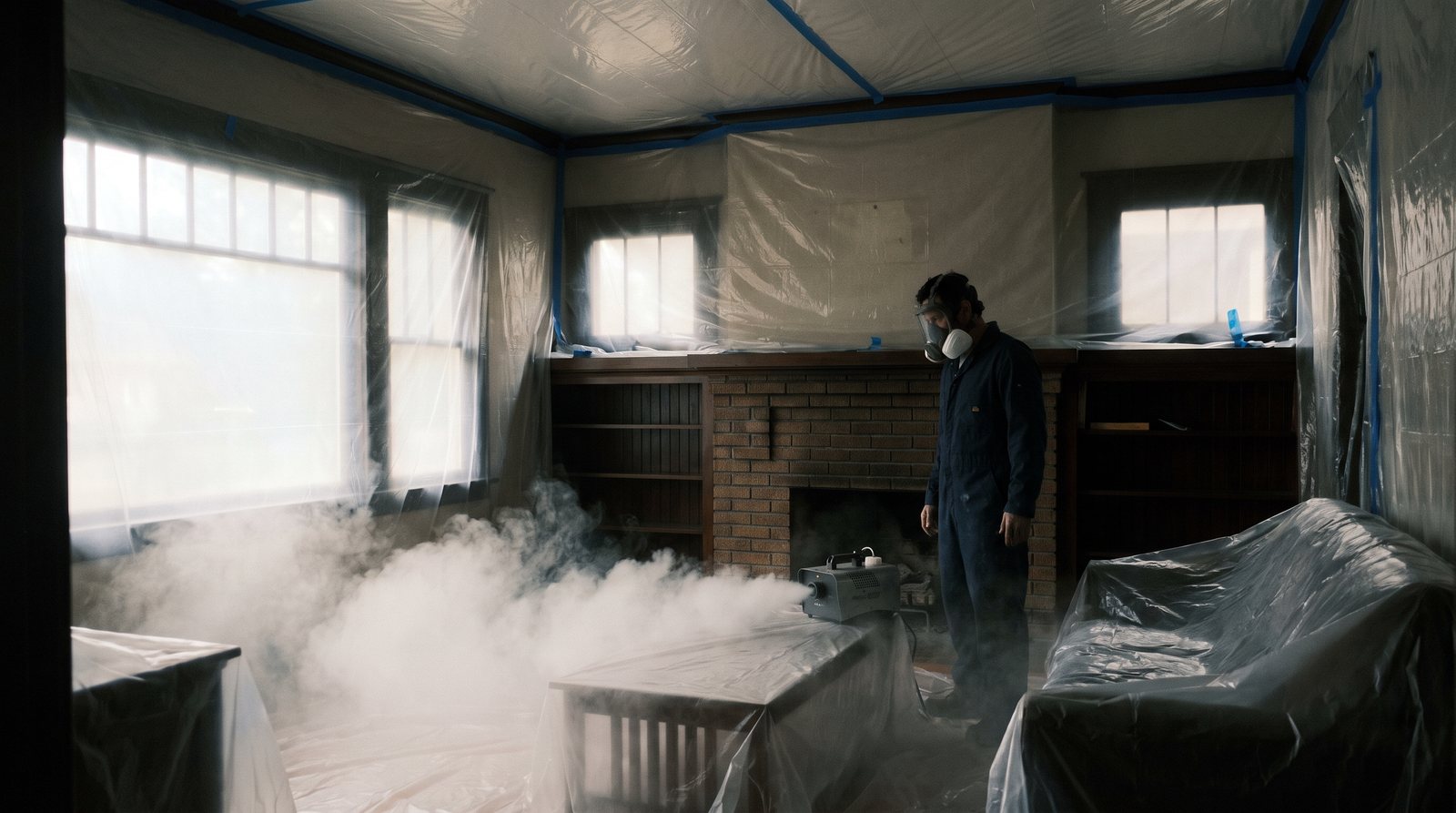
What an inspection checks first in El Monte
First stops on an El Monte property
- The slab perimeter and the base of exterior walls, metered at several points
- Flooring transitions and baseboards, where wicked moisture shows first
- Site drainage: where a flat lot sends storm water, and whether it leaves at all
- Any history of standing water on the lot, which owners usually remember precisely
- Water heater and laundry connections, since a slow leak on a slab has nowhere visible to go
A slab leak hides better than any other leak
Under a raised floor a leak drips somewhere a person can eventually see. Under a slab it saturates the ground the house sits on, silently, for as long as it takes somebody to notice a warm spot or a water bill.
That is why the inspection meters the perimeter rather than only looking at the room where the staining showed.
Neighborhoods this comes up in most: Norwood, Mountain View, Flair Park. The method does not change by address; what the inspector expects to find does.
It dries on top long before it dries underneath.
The most common mistake on this ground is reading the surface. A floor that feels dry, a wall that looks fine and three months of sun all suggest the storm is history, while the framing at the slab edge is still carrying water from it. A meter costs nothing to run and it is the difference between a resolved problem and a slow one.
Mold removal questions El Monte owners ask
It can, and it does not need to come inside to do damage. Saturated ground against and under a slab keeps feeding moisture upward through the concrete for far longer than the standing water itself lasts. Owners who remember exactly where the water sat give inspectors their best starting point.
Usually by elimination and measurement: unexplained warm spots, a water bill that moved, or persistently damp framing in one area with no source above it. The inspection maps the moisture; confirming and repairing a slab leak is a plumber’s work, and the findings will say so rather than quote it.
Not sensibly. Treating a structure that is still taking on water produces a clean result and a repeat visit. Where the moisture is ongoing the job is dried to measured numbers first, and the written findings say which order things have to happen in.
It follows the cause rather than the mold. A sudden covered event such as a burst supply line is often covered; long-term seepage from the ground usually is not. Every job is documented with moisture readings, photographs and a written scope in the format adjusters expect, which is what makes the question answerable at all.
Book a free inspection in El Monte
El Monte is a short drive east. Mention any history of standing water on the lot, because it is usually the fastest clue.
What happens next
An inspector walks the property, most often Noel or Eddie, the two their customers name in review after review.
Written findings with the moisture source named, and no obligation attached to them.