
Black Mold Removal/Los Angeles County
Same process.
Without the folklore.
Black mold is treated the way every other mold is treated here, because the thing that decides the job is the water behind it, not the color on the wall.
Find out what you actually have
Dark growth is worth taking seriously and it is not worth panicking about. The free inspection finds the water feeding it and tells you, in writing, what you are dealing with.
What black mold is, and what it is not
The phrase usually means Stachybotrys chartarum, a dark greenish-black mold that likes cellulose that has stayed wet for a while: drywall paper, cardboard, the back of a baseboard, framing under a long slow leak. It is a real organism with a real preference for long-term moisture, and finding it tells you something useful about how long the water has been there.
What it does not tell you is the color. Plenty of dark growth on a wall is not Stachybotrys, and plenty of Stachybotrys does not read as dramatic black. Cladosporium, Aspergillus and several others all show dark on a damp surface. You cannot identify a species by looking at it, and neither can anyone who quotes you a premium for “black mold removal” on sight.
Here is the part the folklore gets backwards: the species does not change the method. The growth is killed, the dead material is removed, the source moisture is corrected, and the result is verified by a laboratory. That sequence is the same whether the sample comes back Stachybotrys or Cladosporium, which is why there is no separate black mold price on this site.
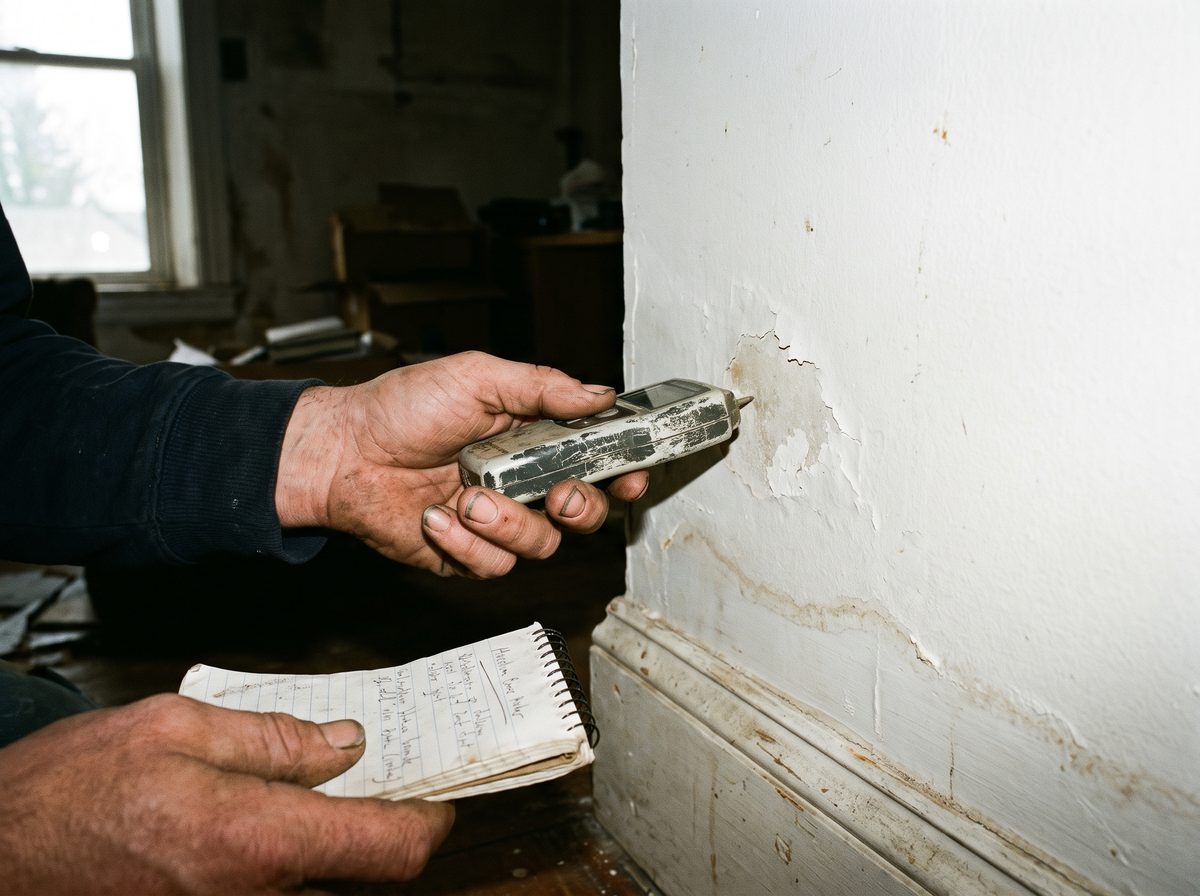
What finding black mold does change
It changes the questions we ask
- How long has this been wet? Stachybotrys needs sustained moisture, not a single spill
- Where else did that water go? A leak patient enough to grow this rarely stayed in one cavity
- Is any of the material saturated rather than contaminated? That part still has to come out
- Has anyone in the household had symptoms that clear up when they leave?
It does not change the price list
There is no black mold surcharge here, because there is no separate black mold method.
A quote that jumps on the word is pricing your alarm, not your house. What actually moves the number is treated volume, how many separate areas are involved and whether anything is saturated.
What we will not do is tell you the species from a photograph. Nobody can.
How black mold is actually removed
The same signature five step fogging process every job here runs, in the same order. The process page has the full detail.
Loose spores and debris come off every accessible surface before anything else happens.
Surfaces are prepped so the fog meets the material, not the film on top of it.
Fills the contained space and reaches the wall cavity the growth came out of.
Dead spores are still allergenic material. They get removed rather than left in place.
A layer on the treated surfaces, which is what the one year guarantee is written against.
Air samples to an independent laboratory, read against an outdoor control.
The color is not the diagnosis.
Black mold sells inspections, upgrades and urgency across this industry, and the word does more commercial work than clinical. Take the growth seriously, find the water that made it, treat all of it, and have somebody independent confirm the result. That is the whole answer, and it is the same answer for every species.
Black mold questions Los Angeles owners ask
People react differently to mold generally, and sensitivity varies more between individuals than between species. Anyone with symptoms they connect to the house should talk to a doctor rather than a remediator; what we can tell you is where the water is and what is growing on it. Any sustained indoor growth is worth removing, whatever its color.
No, and nobody can. Identifying a species takes a sample and a laboratory. A photo is genuinely useful for something else: it shows the pattern and the location, which is often enough to guess where the water is coming from before anyone arrives. Text one to (626) 671-8885 if you have one.
Usually not, because the treatment does not branch on the answer. Identification earns its cost when there is a dispute, an insurance claim, or a medical reason somebody needs it in writing. Otherwise the money is better spent on finding the moisture.
You can remove the stain from a hard non-porous surface. On drywall, plaster or framing the growth has roots into the material and the water is behind it, so cleaning the face treats the symptom and disturbs the spores while doing it. If the surface is porous or the area is larger than a patch, cleaning it yourself mostly moves it around.
Sometimes. The fog moves into wall cavities on its own, so in most cases the plaster does not have to come off. Material that is saturated rather than contaminated, or framing with structural rot, still comes out, and that gets identified at the inspection rather than discovered halfway through.
Book a free inspection
Send a photo if you have one. Somebody walks the property, finds the water, and tells you what you are actually dealing with.
What happens next
An inspector walks the property, most often Noel or Eddie, the two inspectors our customers name in review after review.
Written findings, with the moisture source named rather than guessed, and no obligation attached.