
Attic Mold Removal/Los Angeles County
The mold is upstairs.
So is the cause.
Attic growth is almost never an attic problem. It is a bathroom fan, a roof detail or a ventilation gap, doing the same thing every night for years.
Have somebody get up there
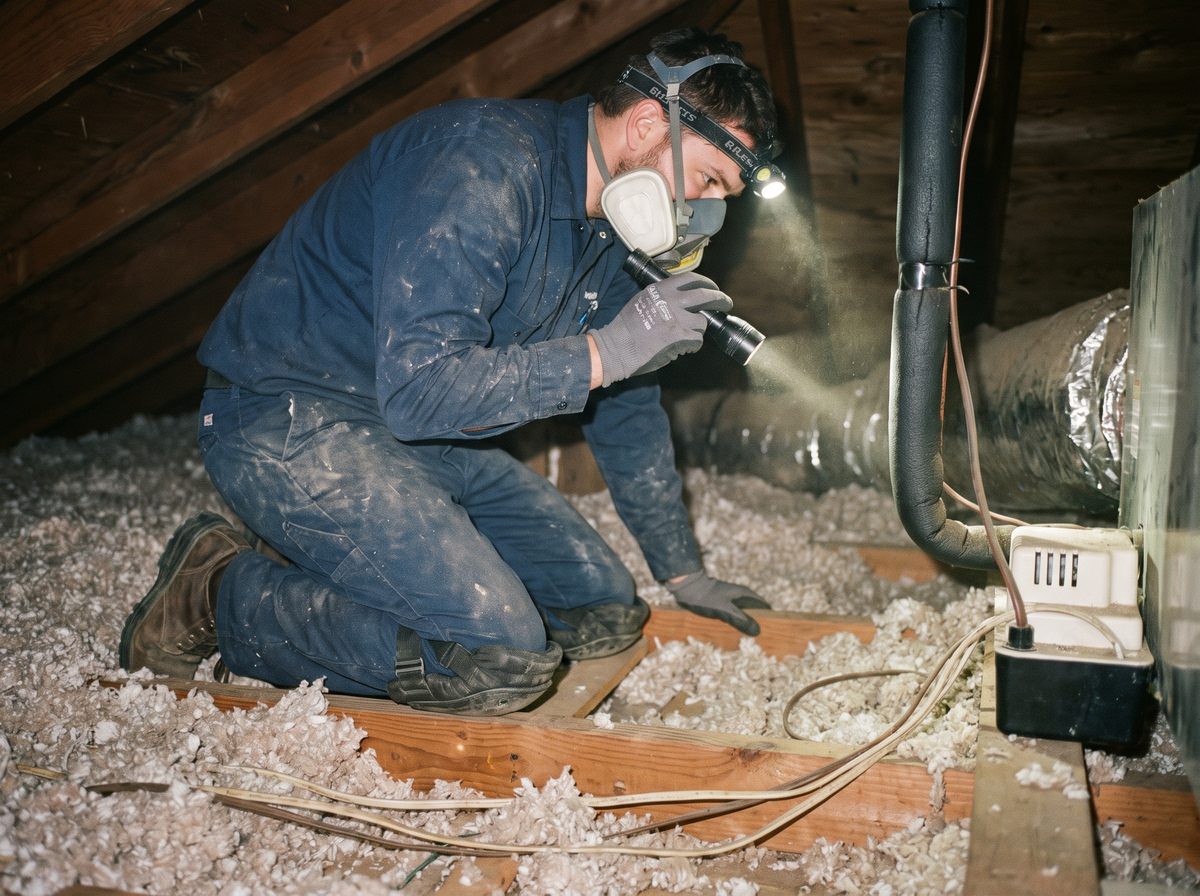
Most people find attic mold because a roofer, a solar installer or a home inspector mentioned it on the way past. The free inspection is the visit that works out why it is there.
Why attic mold is so common in Los Angeles houses
An attic is the one part of a house that is deliberately left unconditioned, and in older Los Angeles stock it is usually the one part nobody has looked at this decade. It is also where warm wet air ends up, because warm wet air rises and a ceiling is not an air barrier.
The most common cause we find is a bathroom exhaust fan that terminates in the attic rather than through the roof or a gable wall. It is a retrofit failure, not a construction failure: somebody added a fan to a house that never had one, ran the duct as far as the joist bay, and stopped. Every shower then puts a few minutes of steam onto cold sheathing, and by the second winter there is a dark bloom over the bathroom.
After that it is roof details. A flashing at a wall junction, a valley, a slipped tile, a skylight curb. Los Angeles rain arrives in concentrated bursts and then nothing for months, so a leak gets one chance to soak the sheathing and then a long dry spell to look completely fine from underneath.
What puts water in an attic
The inspection is looking for which of these it is, because treating the sheathing without closing the source buys you one season.
The single most common finding. The duct ends in the joist bay instead of outside.
Same failure, much more moisture per cycle, and usually lint on the framing as a giveaway.
Insulation pushed into the eaves stops the airflow that used to dry the assembly out.
One storm soaks the sheathing, then months of sun make the stain look historic.
A blocked condensate line or an uninsulated duct sweating onto whatever is under it.
Older non-airtight cans are open chimneys from a humid bathroom straight into the attic.
Treating attic mold without re-sheathing the roof
How an attic job runs
- The source is identified and named in the written findings before a scope is quoted
- The attic is contained and HEPA vacuumed, framing and sheathing both
- The sterilant fog is run through the volume, which is what reaches the top of the rafters and the far corners nobody can physically get to
- Second vacuum, then the protective fog on the treated surfaces
- Air samples from the attic go to an independent laboratory against an outdoor control
Why the sheathing usually stays
Attic growth is typically surface growth on plywood or board sheathing that has been wet and then dry, repeatedly. The material is contaminated, not destroyed.
Replacing it means stripping roofing from above to get at it, which is why stripping attic sheathing is so often a re-roof with a mold line item attached.
What does come out: insulation that has absorbed enough moisture to have stopped working, and any framing with genuine structural rot.
Follow the duct.
If there is a dark patch on the sheathing directly above a bathroom, the answer is nearly always six feet away and made of flexible aluminum. Treat the attic and leave the duct where it is and you will be back up there in two winters, which is the most predictable repeat job in this trade.
Attic mold questions
Often yes, because roofers are in attics constantly and dark sheathing is easy to spot. It is worth having looked at properly, because the same visit establishes whether the cause is their department or a ventilation problem that has nothing to do with the roof. The inspection is free, so finding out costs nothing either way.
Only where it has taken on enough moisture to have stopped insulating, or where it is sitting directly under an active leak. Dry insulation with growth on the framing above it generally stays. That call is made at the inspection with a moisture meter rather than by default.
The findings will name it precisely, including where the duct currently ends and where it needs to terminate. Re-routing a duct through a roof or a gable is a different trade’s work and we will say so rather than quote it. What we will not do is treat the attic and stay quiet about the reason it needed treating.
Because it fills a volume rather than coating a surface from a nozzle. An attic is the case that shows the difference most clearly: the far ends of the rafter bays, the ridge and the spaces behind stored boxes are exactly the places nobody can reach by hand and exactly the places air gets to.
Attic staining is one of the things home inspectors reliably photograph, so yes. Closing it out with independent laboratory clearance gives you a document from a third party rather than a contractor’s own certificate, which is what the other side’s agent will want. Start early; sampling and turnaround take time.
Book a free attic inspection
Somebody goes up, reads the moisture, and works out which of the six usual causes it is.
What happens next
An inspector checks the attic, the fan terminations and the roof details from the inside.
You get written findings naming the source, and a scope only if treatment actually makes sense.