
Mold Removal/Santa Monica, CA
The marine layer
never fully leaves.
Overnight humidity shortens the window in which a stucco wall can dry, and salt air shortens the life of the flashing that keeps it dry.
A free mold inspection near the coast
Santa Monica’s marine layer is a constant, not an event. The inspection works out whether your walls are getting the chance to dry between one night and the next.
Why Santa Monica houses grow mold
Coastal Santa Monica sits under a marine layer for a large part of the year, and the significance of that is not the fog itself but the schedule. Humidity stays high overnight and well into the morning, so the daily window in which a wall assembly can dry is much shorter here than it is five miles inland.
Stucco over wood frame is the dominant construction, and stucco is a reservoir cladding: it absorbs water and gives it back slowly. In a dry inland climate that works because the giving-back happens every day. Under a persistent marine layer the assembly takes on moisture overnight and does not fully shed it before the next night arrives, so the moisture content of the wall creeps upward across a season.
Salt air adds the second mechanism. It accelerates corrosion on the metal in the building envelope: flashing, fasteners, window and door frames, railing connections. A flashing that would last decades inland fails sooner here, and once it does, the same marine layer that slowed the drying is also feeding the leak.
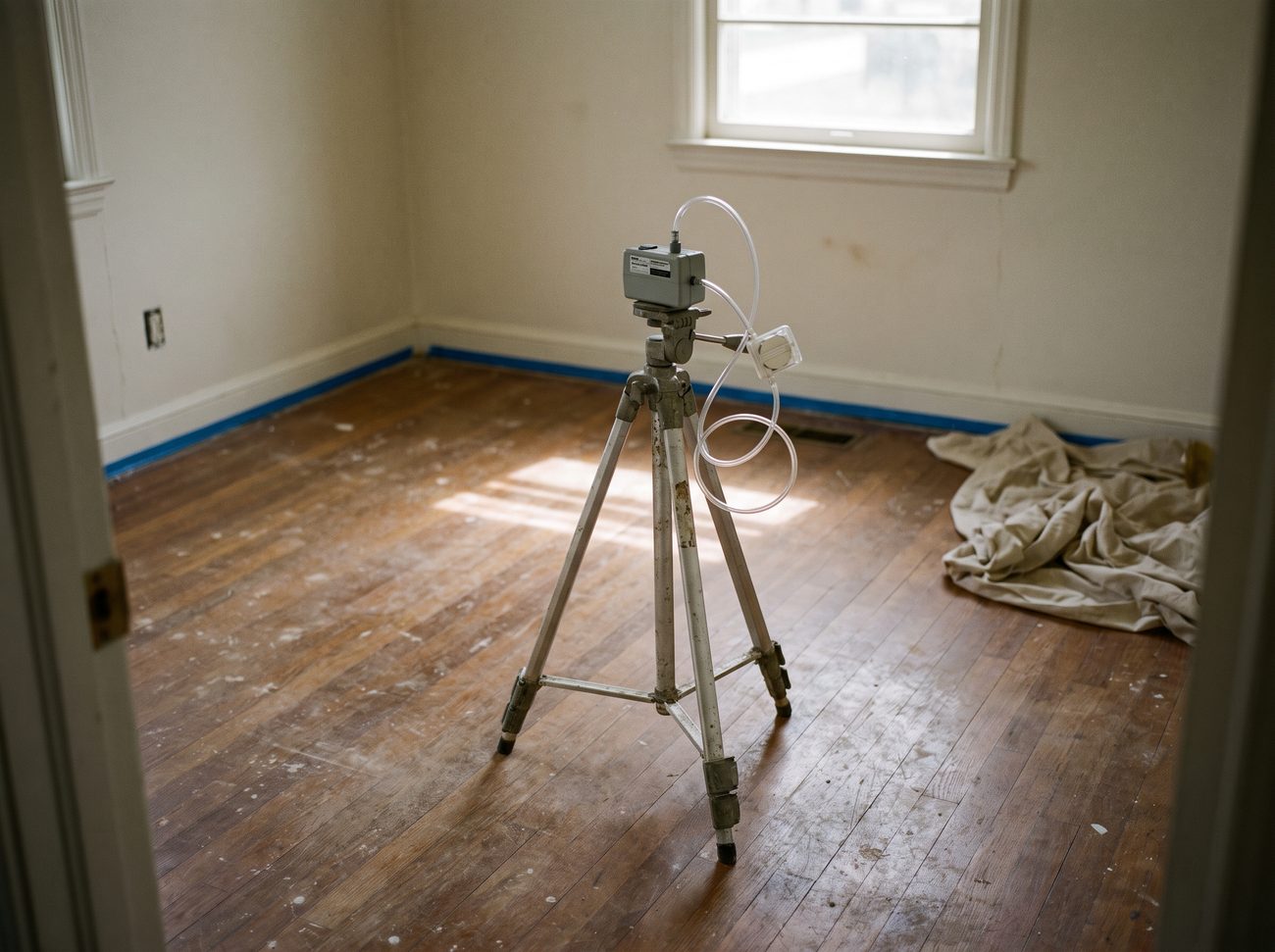
What an inspection checks first in Santa Monica
First stops on a Santa Monica property
- Stucco on the seaward elevation, metered at several heights rather than inspected by eye
- Window and door flashings and their fasteners, where salt air shortens the service life
- Wall cavities behind the wettest elevation, which get the least drying time
- Bathroom and kitchen extraction, since indoor humidity has less chance to leave
- Crawlspace where the foundation is raised, for soil, barrier and ventilation
Ventilation strategies that assume dry air
The standard advice to open a window and let a room dry out is inland advice. On a foggy coastal morning the air coming in carries more moisture than the air going out.
Which is why extraction that vents outside, and dehumidification where it is warranted, do more here than airing a room does.
Neighborhoods this comes up in most: Ocean Park, Sunset Park, Wilshire Montana. The method does not change by address; what the inspector expects to find does.
The drying window is the whole story.
Wetting is not what damages a building; failing to dry is. Inland, a wall that takes on water has fifteen dry hours to recover. Under a marine layer it may have five, and across a winter those hours do not add up to the same thing. Everything about coastal moisture follows from that arithmetic.
Mold removal questions Santa Monica owners ask
Proximity matters, and so does exposure. A property a few blocks inland with good sun on its western elevation may fare better than one closer to the water in permanent shade. The variable is how many hours a day the assembly gets to dry, not the distance itself.
Where the source is ambient rather than a leak, it genuinely helps, and it is one of the few places we will suggest equipment. Where there is an actual leak it treats a symptom and masks the signal, so the order matters: find the source first, then decide.
On a clear afternoon, yes. On a foggy morning you are bringing damp air in. This is the one piece of general household advice that works differently at the coast, and it catches people out routinely.
Very likely. Salt air shortens the life of the metal in an envelope considerably, and a failed flashing is a direct water path into a wall that already has limited drying capacity. It is worth having looked at before it becomes an interior problem.
Book a free inspection in Santa Monica
Say how close to the coast you are and which elevation faces the water. Both change what the inspector expects.
What happens next
An inspector walks the property, most often Noel or Eddie, the two inspectors our customers name in review after review.
Written findings with the moisture source named, and no obligation attached to them.