
Mold Removal/Eagle Rock, CA
The valley holds
the cool air.
Cool air settles into the valley overnight, and half the foundation vents that used to dry these houses have been planted over.
A free mold inspection in Eagle Rock
Cool air settles into this valley overnight and against houses that sit open underneath. The inspection works out whether yours is collecting it.
Why Eagle Rock houses grow mold
Eagle Rock sits in a bowl with slopes on more than one side, and cool air does what cool air does: it settles and stays. Overnight the lowest parts of the valley hold damper, cooler air for longer than the surrounding ridges, and houses on piers with an open crawlspace beneath them sit directly in it.
The housing is 1920s Spanish and Craftsman on the valley floor, with more of the same climbing the surrounding slopes. Raised foundations throughout, vented crawlspaces, unconditioned attics, and stucco or plaster over wood frame. Assemblies designed to dry between wettings, which works as long as the drying half of that cycle happens.
The attic side is the other half of the picture here. Tile and older composition roofs over open framing, skylights added in the decades since, and the standard retrofit failure of a bathroom fan that terminates somewhere in the attic. On a house that already sits in cool damp air at night, the margin for that mistake is smaller than it would be up on a ridge.
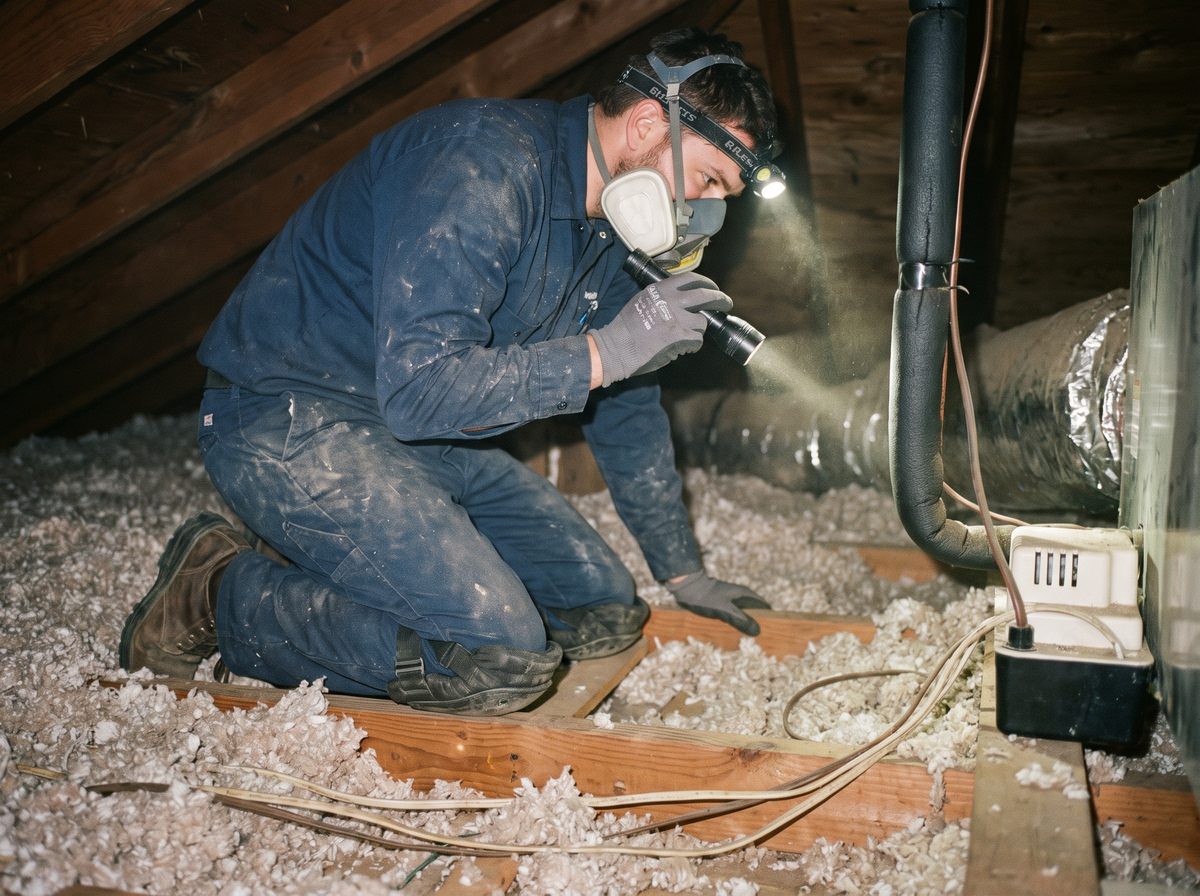
What an inspection checks first in Eagle Rock
First stops on an Eagle Rock property
- The crawlspace, for whether the vents are still open and clear of planting
- Bathroom and dryer vent terminations, the standard failure in 1920s retrofits
- Attic framing and sheathing, especially around any skylight or roof penetration added later
- Where the lot sits relative to the low point of the valley
- Stucco and plaster on the shaded elevation, metered rather than looked at
Designed to dry, prevented from drying
A 1920s house here has a moisture strategy: open vents under the floor, an open attic above the ceiling, and air moving through both.
Almost everything that goes wrong is a later decision that closed one of those paths. Insulation in the soffits, planting over the vents, an addition across the airflow. Finding the closure is usually finding the job.
Neighborhoods this comes up in most: Colorado Boulevard, Hill Drive, Eagle Rock Valley. The method does not change by address; what the inspector expects to find does.
Count the vents that still work.
It is an unglamorous check and it explains more Eagle Rock inspections than anything else. A house built with eight foundation vents and four functioning ones has lost half its drying capacity, and nobody wrote it down when the planting went in. The correction is often clearing rather than construction, which makes it the cheapest good news in this trade.
Mold removal questions Eagle Rock owners ask
It changes what the inspector expects. Houses lower in the valley sit in cooler damper night air and tend to present crawlspace problems; houses on the slopes tend to present drainage and attic problems. Both are common here, which is why the question gets asked first.
It can if it blocks the soffit vents, which is a frequent outcome when batts are pushed out to the eaves. The assembly was drying by moving air through that path, and closing it removes the drying without removing the moisture. It is fixable with baffles rather than by removing the insulation.
No. The process does not wet or alter finishes, which is why it suits stock like this. Anything genuinely saturated rather than contaminated still has to come out, and that is identified at the inspection instead of discovered partway through.
Most treatments run a few hours and most homes are back in use the same day. A property with a crawlspace, an attic and an interior area to treat is three containments rather than one, which affects the day more than it affects the method.
Book a free inspection in Eagle Rock
Eagle Rock is about twenty minutes from the office. Say whether the house is on the valley floor or up a slope.
What happens next
An inspector walks the property, most often Noel or Eddie, the two inspectors our customers name in review after review.
Written findings with the moisture source named, and no obligation attached to them.