
Mold Removal/Pasadena, CA
Your bungalow survived
a century.
A five step fogging treatment that reaches the lath cavity on its own, so in most cases the plaster does not even have to come off. Free inspection, from San Marino.
A free mold inspection that respects the house
Pasadena has more protected and near-protected housing stock than anywhere else in the county. The inspection tells you what is happening behind the plaster without anybody opening it to find out.
Why Pasadena houses grow mold
Pasadena’s Craftsman and Spanish revival stock is mostly pre-1940, and it was built for a climate that was assumed to handle its own drying. Raised foundations, original plaster, unconditioned attics, cross-ventilation as the only mechanical strategy. It works, until something adds water faster than the house can shed it.
The foothill position adds a source most cities do not have. Subsurface flow off the San Gabriels does not follow the rain calendar, so a crawlspace under a house on the northern side of town can be genuinely damp in September with no rain since March. Owners reasonably assume a dry season means a dry house, and under the floor that is not true.
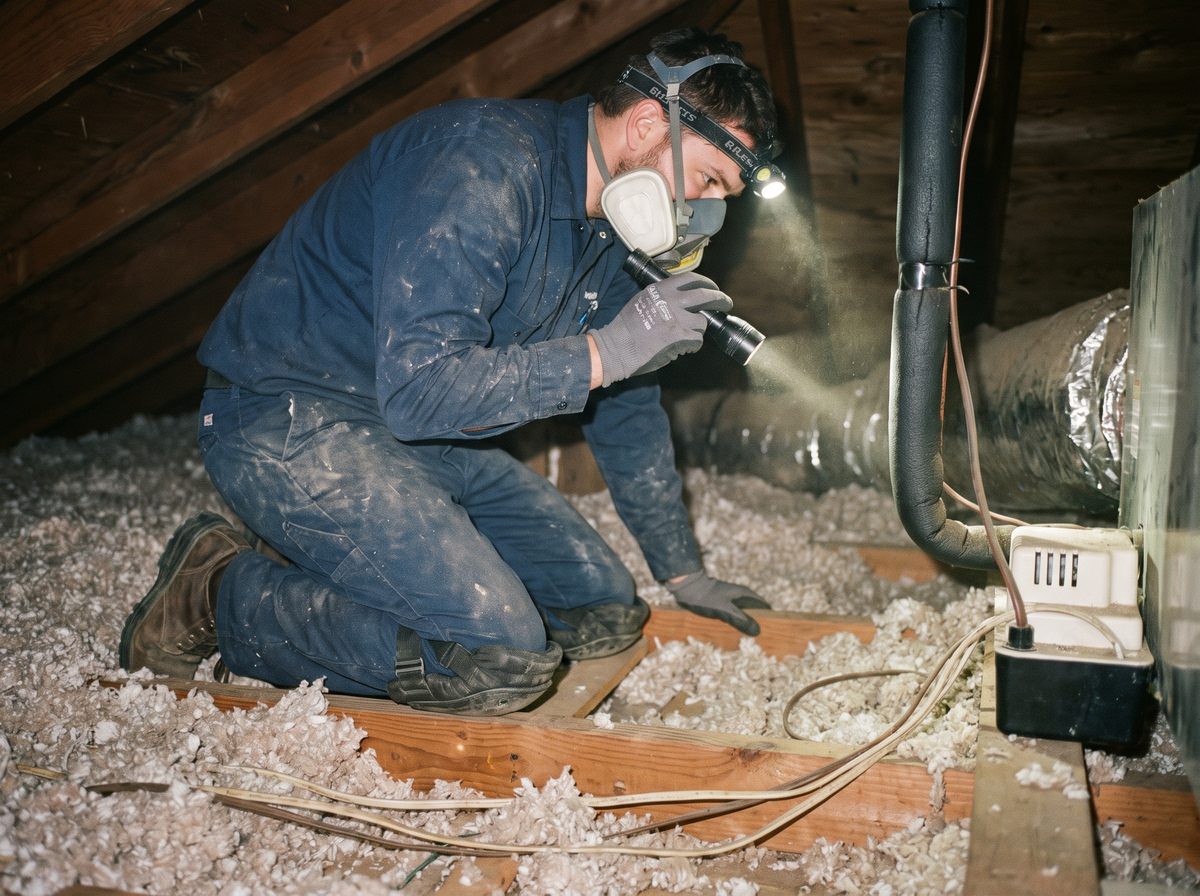
Then there are the retrofits. A century of updates means bathrooms and kitchens were added to rooms that never had them, and the most common single finding in this city is a bathroom exhaust fan whose duct ends in the attic rather than passing through the roof. Every shower puts steam on cold sheathing, and by the second winter there is a dark bloom above the ceiling.
What an inspection checks first in Pasadena
First stops on a Pasadena property
- Where every bathroom fan duct actually terminates, which is the single most common finding here
- Attic sheathing above bathrooms and kitchens, especially north-facing slopes
- The crawlspace, for bare soil and for foothill subsurface flow that ignores the season
- Original plaster on exterior walls, metered rather than judged by eye
- Roof details at valleys and wall junctions, where a single storm can soak sheathing
Landmark districts change what a remediator may do
Pasadena has designated districts and a large body of near-protected housing, and a demolition-first scope runs straight into what may and may not be altered.
A non-destructive process does not touch protected fabric at all, which turns a permissions problem into a non-problem. Anything that genuinely must be opened is named up front.
Neighborhoods this comes up in most: Bungalow Heaven, Madison Heights, Garfield Heights, Linda Vista. The method does not change by address; what the inspector expects to find does.
It was built to breathe. Something stopped it.
Almost every mold problem in this city’s older stock traces to an intervention rather than to the original house: a fan that vents nowhere, insulation pushed into the soffits, a hardscape that redirected the winter fall, an addition that sealed a vent. The building was fine for eighty years. Find what changed and you have found the job.
Mold removal questions Pasadena owners ask
It restricts what a demolition-first remediator can do to protected features. A non-destructive fogging process does not alter finishes, so historic fabric is not at risk. Any section that genuinely has to be opened is flagged before work starts.
In the Pasadena foothills, subsurface flow off the San Gabriels does not follow the rain calendar. A crawlspace with bare soil and no vapor barrier keeps releasing moisture into the floor structure through a dry summer.
A common retrofit failure in older homes is a fan duct that terminates in the attic rather than through the roof or a gable, putting warm humid air onto cold sheathing with every shower.
A clearance report from a third party laboratory that did not perform the remediation carries weight in a transaction that a remediator’s own certificate does not. Sampling and lab turnaround take time, so start early.
Book a free inspection in Pasadena
Pasadena and the San Gabriel Valley are the shortest drives from San Marino, and visits are usually same or next day.
What happens next
An inspector walks the property, most often Noel or Eddie, the two inspectors our customers name in review after review.
Written findings with the moisture source named, and no obligation attached to them.