
Mold Removal/Culver City, CA
Low ground
beside the creek.
Low ground near the creek and a short coastal drying window, on stock that runs from 1940s tract to new multifamily.
A free mold inspection in Culver City
Culver City sits low near Ballona Creek with a water table to match, and marine air on top of it. The inspection measures what both are doing to your building.
Why Culver City houses grow mold
Culver City is low-lying, and much of it sits on ground near Ballona Creek where the water table is closer to the surface than it is on the surrounding rises. That single site characteristic produces the local pattern: slabs in contact with consistently damp ground, and crawlspaces on the older stock that stay humid regardless of the season.
The marine influence sits on top of it. Close enough to the coast to get meaningful overnight humidity, the drying window is shortened in the same way it is in Santa Monica, so a wall that takes on moisture has less opportunity to lose it again. Low ground and a short drying window is a combination rather than two separate facts.
The building stock now runs from 1940s tract houses on small flat lots to substantial new multifamily construction, and those fail differently. The older houses show it at the slab perimeter or in a shallow crawlspace; the newer buildings are tight, mechanically cooled, and tend to show condensate and extraction failures rather than ground moisture.
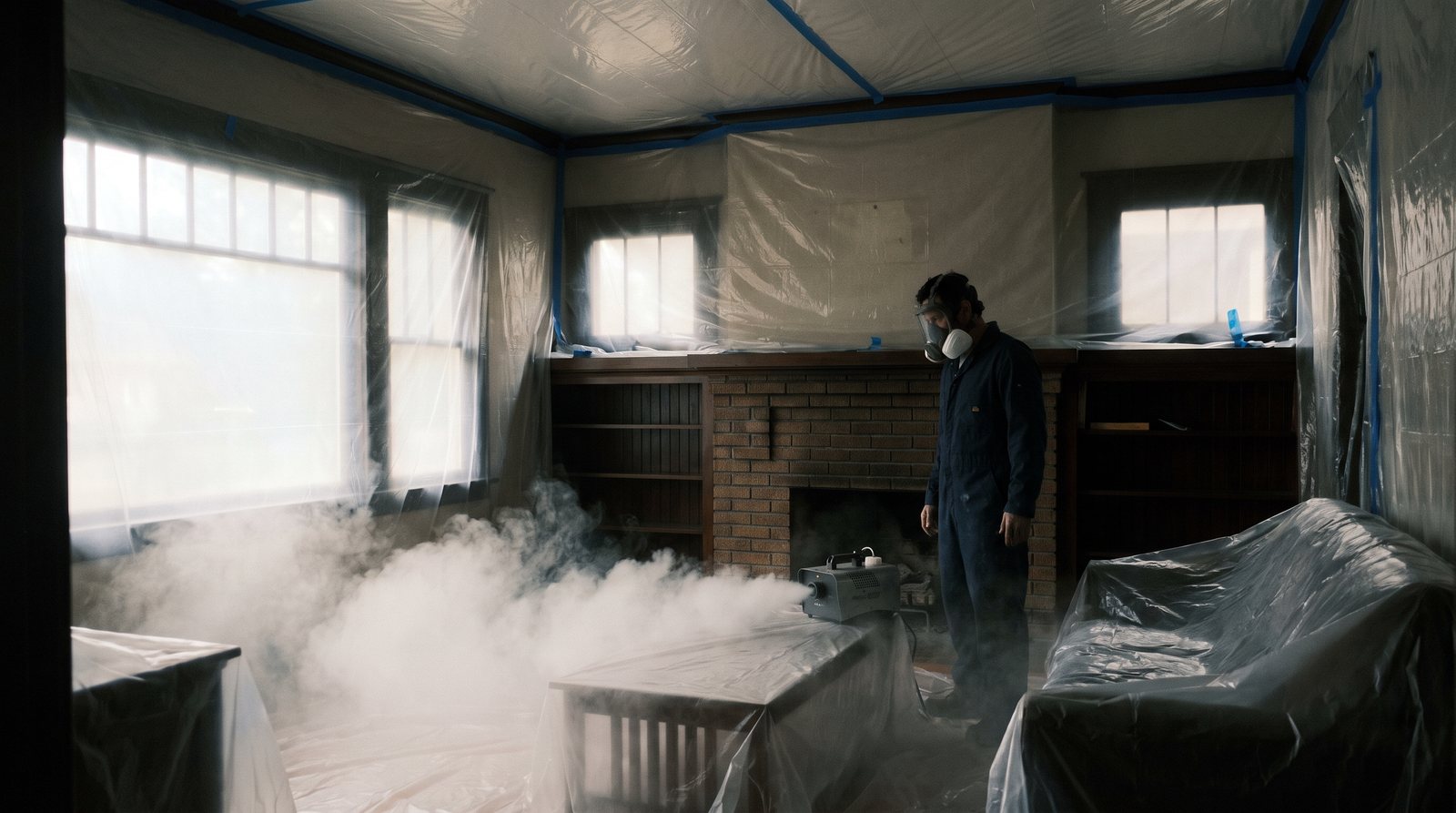
What an inspection checks first in Culver City
First stops on a Culver City property
- The slab perimeter and base of exterior walls, metered at several points
- Where the lot sits relative to the creek and where storm water goes from it
- Crawlspace soil and vapor barrier on the older raised-foundation housing
- Condensate lines and extraction in the newer sealed multifamily
- Flooring transitions and baseboards, which show wicked moisture before walls do
Old stock and new stock, opposite problems
A 1940s house here tends to have too much moisture arriving from the ground and enough leakiness to survive it slowly.
A new building has very little ground moisture reaching it and almost no natural drying, so a single mechanical failure produces a problem quickly. The intake question is which of those you are in.
Neighborhoods this comes up in most: Carlson Park, Blair Hills, Fox Hills. The method does not change by address; what the inspector expects to find does.
Elevation decides more than era does.
Across this city, where a property sits relative to the creek predicts ground moisture better than when it was built. Two houses of the same vintage a few streets apart can have entirely different crawlspace conditions, and owners often know exactly which streets flood and which do not. That local knowledge is genuinely useful to an inspector.
Mold removal questions Culver City owners ask
It predicts ground moisture well. Low ground near a channel holds water closer to the surface, and a slab or a shallow crawlspace over that ground takes some of it on continuously. It is one of the more reliable local indicators there is.
New construction fails differently rather than not at all. Tight, heavily cooled buildings have very little natural drying, so a blocked condensate line or a bathroom fan venting into a ceiling produces a problem faster than the same fault would in an older house.
The treatment addresses wall cavities, attics and the interior volume, not the concrete itself. Where moisture is wicking up through the slab, the correction is drainage and source control rather than anything done to the slab, and the findings will say so plainly.
Very. It tells an inspector where to meter first and it usually tells them how long the ground stays saturated afterwards. Owners who can describe exactly where the water sat and for how long give the most useful starting information of anyone.
Book a free inspection in Culver City
Say roughly where you are relative to the creek, and whether the building is older or recent.
What happens next
An inspector walks the property, most often Noel or Eddie, the two inspectors our customers name in review after review.
Written findings with the moisture source named, and no obligation attached to them.