
Mold Removal/Long Beach, CA
Harbor air
does not dry out.
Harbor humidity has no real dry season, so a building never gets the annual reset that inland stock relies on.
A free mold inspection in Long Beach
Harbor humidity is steady rather than seasonal, and a century of coastal housing sits in it. The inspection finds where that has caught up with your building.
Why Long Beach houses grow mold
Long Beach sits on the harbor, and harbor air behaves differently from inland air in one important way: it does not have a dry season to speak of. Humidity stays in a relatively narrow band year round, which removes the annual drying period that inland buildings rely on to recover from a wet winter.
The housing has been accumulating the consequences for a long time. 1920s Craftsman and Spanish near the shore on raised foundations, mid-century construction further inland on slab, and a great deal in between. On the older stock the crawlspace is the story: a high water table plus steady humidity means the space under the floor rarely gets properly dry.
Salt is the other constant. It shortens the service life of the metal in a building envelope, so flashings, fasteners, window frames and railing connections fail sooner here than they would twenty miles inland. Once one of them admits water, the surrounding assembly is working in air that will not help it dry.
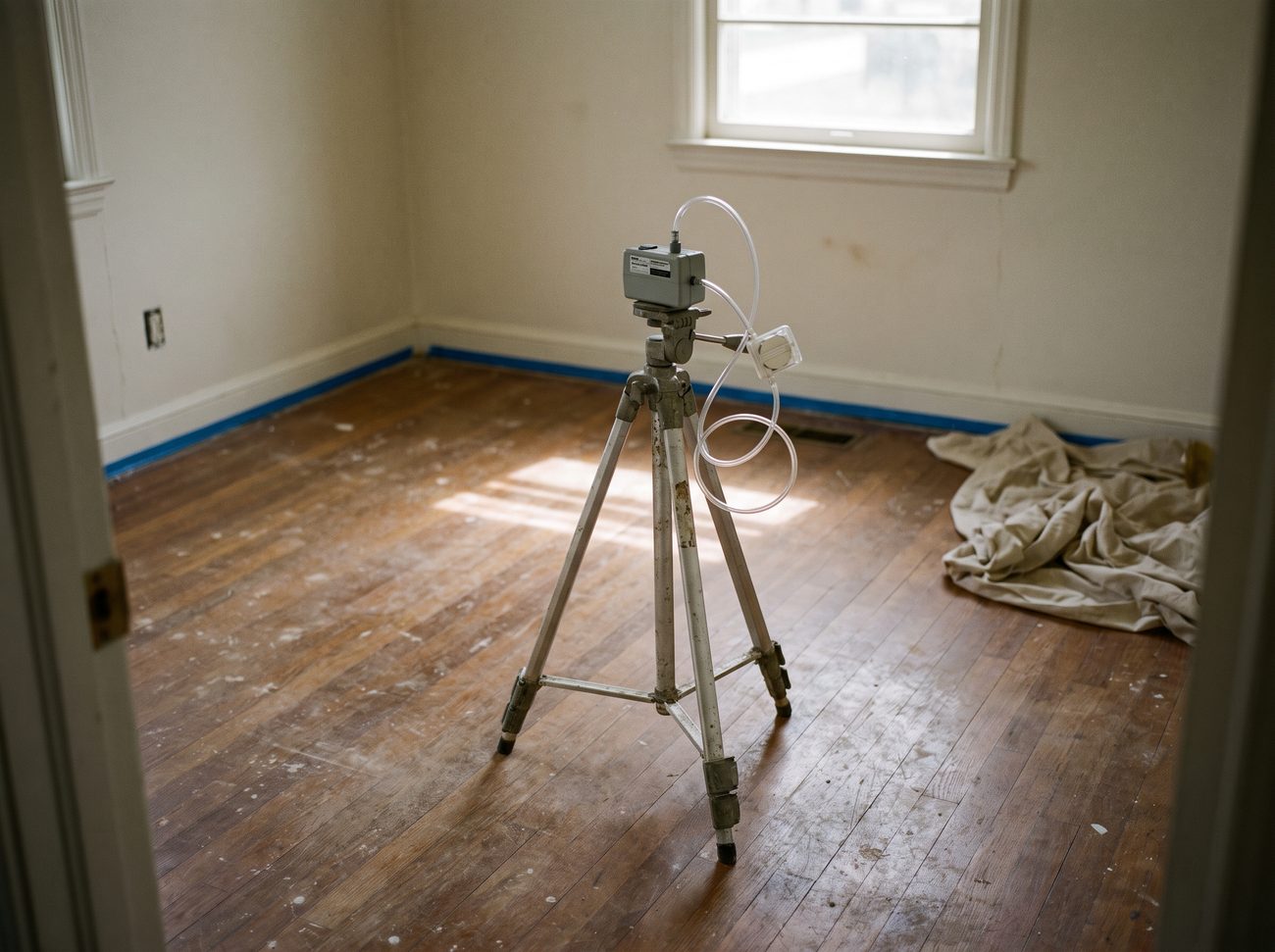
What an inspection checks first in Long Beach
First stops on a Long Beach property
- Crawlspace soil, vapor barrier and standing water, on ground where the table sits high
- Subfloor and joists metered directly, since steady humidity produces slow damage rather than obvious damage
- Flashings, fasteners and window frames, where salt shortens the service life
- Bathroom and kitchen extraction, because indoor moisture has nowhere easy to go
- For multifamily, the plumbing stack and the units above and below the reported one
No dry season means no reset
Inland, a building that takes on moisture over winter spends a long hot summer recovering. Here the recovery period is much weaker, so problems accumulate rather than reset.
It is why a slow crawlspace issue in this city tends to be older than the owner thinks by the time anyone measures it.
Neighborhoods this comes up in most: Belmont Heights, Bixby Knolls, Alamitos Beach, Naples. The method does not change by address; what the inspector expects to find does.
Steady is worse than severe.
A dramatic leak gets found and fixed. Persistent moderate humidity under a floor gets nothing: no stain to react to, no event to remember, no season where it visibly improves. Long Beach produces more of the second kind than anywhere else in the county, and it is the kind that has usually been running for years when somebody finally opens the hatch.
Mold removal questions Long Beach owners ask
On its own it raises the baseline rather than causing growth. What it does is remove the margin: an assembly that would shrug off a small leak inland has far less capacity to recover here, so the same fault produces a problem sooner and a worse one.
Yes. Long Beach is within Los Angeles County and within the service area, at the southern end of it. Scheduling is usually a day or two rather than same day, which is worth knowing when you call.
It is nearly always part of the answer and rarely all of it. A barrier stops soil evaporation; it does not lower the ambient humidity or stop a leak. Where the water table is high, drainage may be needed as well, and the findings name which corrections apply.
Scoped per building rather than per complaint, with documentation and independent laboratory clearance for each treated area. The commercial and HOA page covers how that runs for owners and managers.
Book a free inspection in Long Beach
Long Beach is the southern end of the service area. Say whether the property is near the shore or further inland.
What happens next
An inspector walks the property, most often Noel or Eddie, the two inspectors our customers name in review after review.
Written findings with the moisture source named, and no obligation attached to them.