
Mold Removal/Hollywood Hills, CA
The canyon fog
sits under the deck.
Canyon fog sits under a cantilevered house all night, and a substantial part of the framing is outdoors year round.
A free mold inspection on a canyon property
Hillside houses hold canyon air underneath them all night and reach out over ground nobody can easily get to. The inspection is the visit that actually looks.
Why Hollywood Hills houses grow mold
The Hollywood Hills are canyon country, and canyons hold moisture on a daily cycle. Cool damp air settles into them overnight, lingers into the morning on the shaded sides, and sits against the underside of houses that are built out over the slope rather than on it. Two properties a few hundred feet apart, one on a ridge and one down in a canyon, live in genuinely different climates.
The construction amplifies it. Post and pier and caisson foundations, stepped footings, cantilevered decks and framing exposed to that air underneath. The underside of a hillside house is not an enclosed crawlspace, it is structure standing in canyon air, and on the shaded canyon side it may not fully dry between one night and the next through a wet winter.
Decks deserve their own paragraph. They are the most weather-exposed framing on the building, the ground beneath them is shaded and slow to dry, and the connection where a deck meets the house is a detail that admits water when it fails. On a canyon property that combination is the most common structural moisture finding there is.
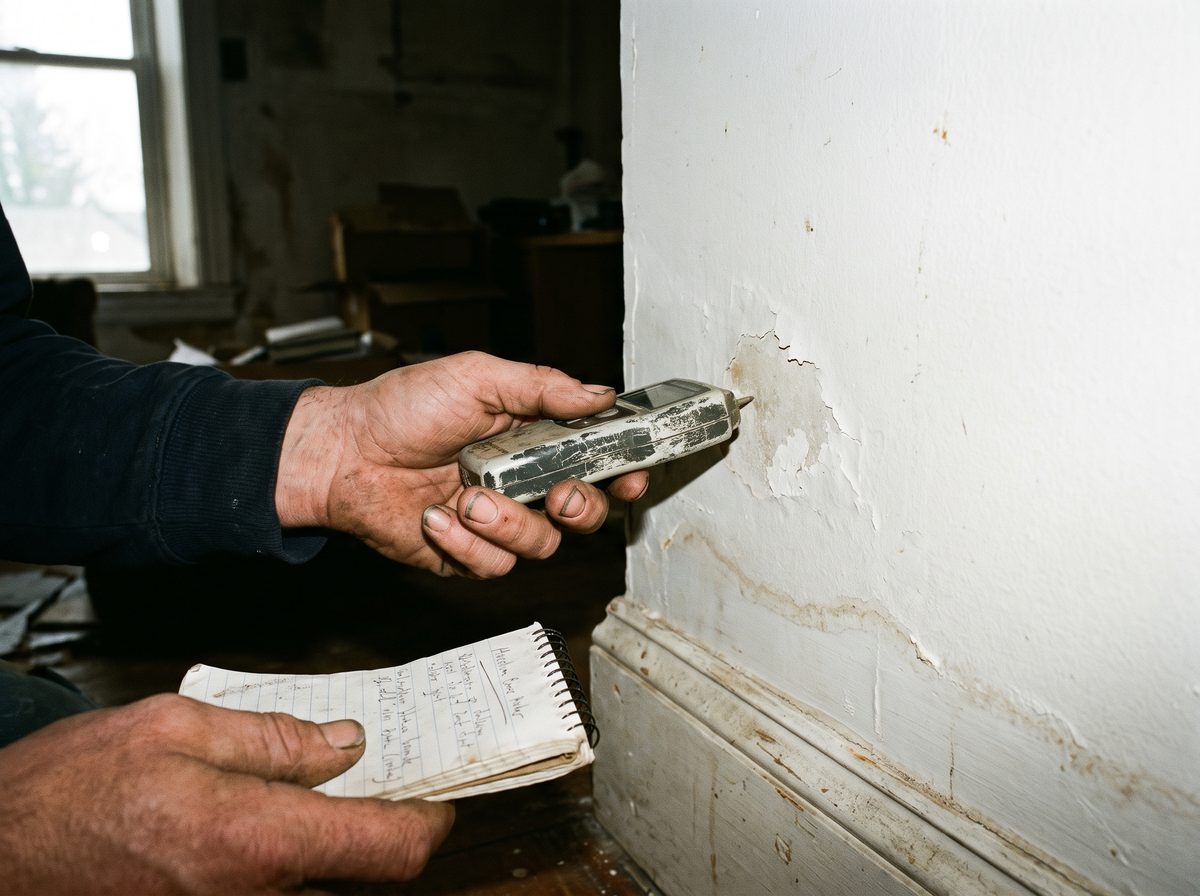
What an inspection checks first in Hollywood Hills
First stops on a Hollywood Hills property
- Framing under the house, especially on the shaded canyon side
- Deck framing and the ledger where the deck attaches to the structure
- The ground under and around decks, which stays shaded and damp
- Every separate compartment under a stepped foundation, not only the accessible one
- Drainage above the house, where the slope sheds toward the building
Ridge or canyon changes the answer
A ridge property gets sun and moving air and dries readily. A property a few hundred feet down the same road, on the shaded side, may hold moisture in its framing for most of a winter.
It is the first question on this inspection, and owners always know the answer even when they have never thought of it as relevant.
Neighborhoods this comes up in most: Laurel Canyon, Nichols Canyon, Outpost Estates. The method does not change by address; what the inspector expects to find does.
The house is standing in the weather.
A slab house has its structure sealed inside a building envelope. A cantilevered hillside house has a substantial share of its framing outdoors, under the floor, in canyon air, year round. Treating those two as the same maintenance problem is how a property that looks immaculate from the street turns out to have a decade of quiet moisture underneath it.
Mold removal questions Hollywood Hills owners ask
More than almost anything else about the property. The shaded side holds cool damp air far longer through the day and the framing under a house there dries much more slowly. It is the first thing an inspector asks and it reliably predicts what they find.
This is the construction type the method suits best. A fog fills the volume it is introduced into, so compartments that a person cannot physically enter are still treated as long as they share an air path. Genuinely sealed sections are named in the findings rather than assumed.
It can be either and the two look similar from a few feet away. Weathered wood is gray and uniform; growth is patchy and tends to follow where water sits or runs. A meter on the framing settles it in a minute, which is worth doing before replacing anything.
No, and that is a fair thing to ask on a hillside property. The process does not wet or load the structure. Framing with genuine rot is a separate question: killing the fungus does not restore strength, and that finding goes to a structural contractor rather than staying with us.
Book a free inspection in Hollywood Hills
Say whether you are on a ridge or down in a canyon, and whether the house has decks over the slope.
What happens next
An inspector walks the property, most often Noel or Eddie, the two inspectors our customers name in review after review.
Written findings with the moisture source named, and no obligation attached to them.