Mold Removal/Los Angeles, CA
Every housing era
in one city.
Every construction era the county has, inside one boundary. Foundation type and build era tell an inspector more than the postcode does.
A free mold inspection anywhere in the city
Los Angeles contains every construction era the county has, which means the useful question is not what city you are in but what your building is. The inspection answers it.
Why Los Angeles houses grow mold
The City of Los Angeles is not one housing type and a mold answer that treats it as one is guessing. Within its boundary there is pre-1920 Craftsman on raised foundations, 1920s courtyard apartment buildings, post-war slab tract, mid-century hillside construction, and new mid-rise multifamily, and each of those fails in a different place for a different reason.
What they share is that the moisture comes from a small number of sources regardless of era: plumbing that leaks, roofs and envelopes that admit water, ground that gives it up, and mechanical systems that make it. The construction type decides where that water collects and how long it takes to show, and that is what an inspection is establishing in the first fifteen minutes.
So the intake question here is about the building rather than the neighborhood. Raised foundation or slab. Single family, small multifamily, or a managed building. Original or extended. Air conditioned or not. Those four answers narrow the likely source more than a postcode does, and they decide what an inspector brings and where they start.
What an inspection checks first in Los Angeles
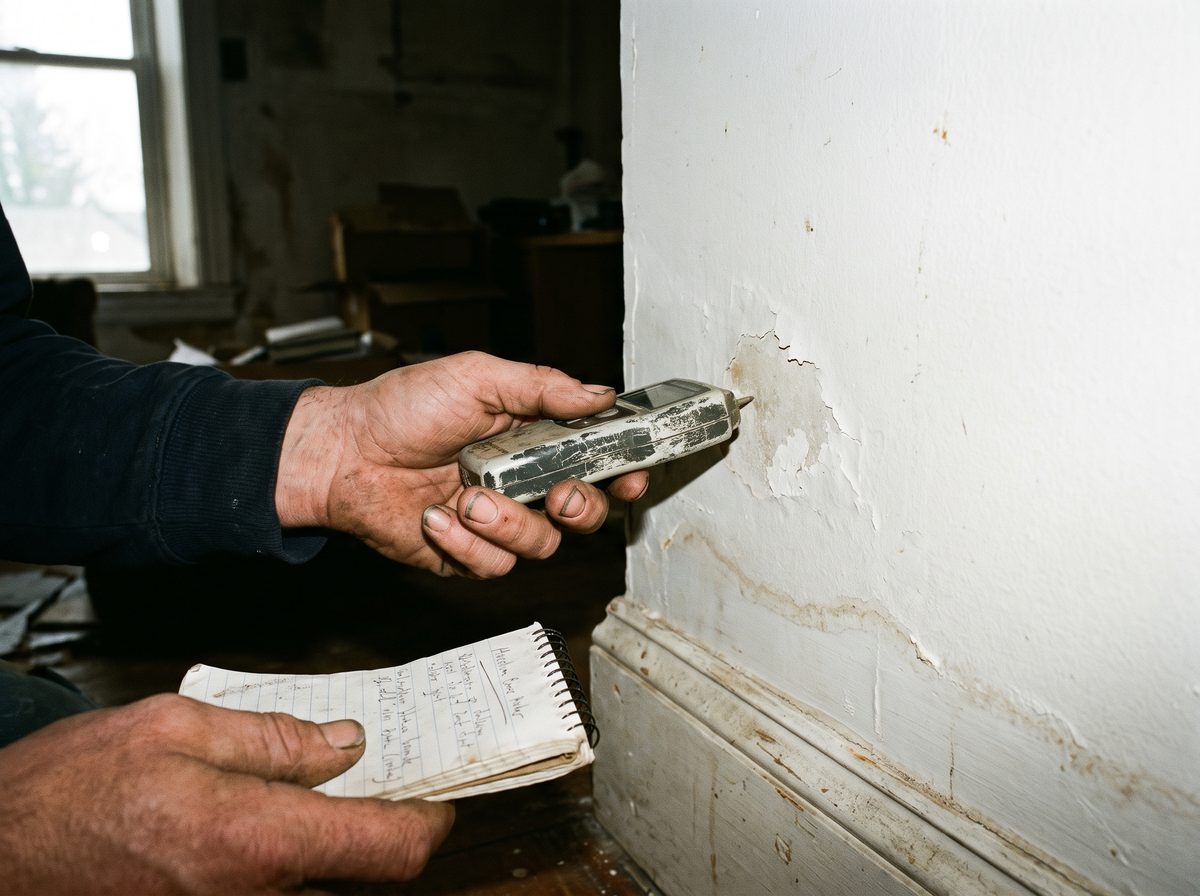
What the intake establishes first
- Foundation type: a crawlspace and a slab are different first stops entirely
- Whether the building is single family, small multifamily or professionally managed
- Construction era, which predicts both the retrofits and the original drying strategy
- Whether the property has mechanical cooling, and where the air handler sits
- Whether anything was added, converted or re-roofed, and roughly when
Which page you actually want
If your address sits in one of the neighborhoods with its own page, that page is more specific than this one. Hollywood, Silver Lake, Highland Park, Eagle Rock, Atwater Village and Hollywood Hills are all within the city.
The full list has the rest.
Neighborhoods this comes up in most: Downtown, Koreatown, Mid-Wilshire, Echo Park. The method does not change by address; what the inspector expects to find does.
The building answers it, not the postcode.
A 1912 Craftsman on piers in Highland Park and a 2019 mid-rise in Koreatown are both Los Angeles addresses and they have almost nothing in common as buildings. Any company whose answer to a mold question is the same across that range is describing its marketing rather than its method.
Mold removal questions Los Angeles owners ask
The service area is Los Angeles County, which contains the city entirely, so yes. Several neighborhoods have their own pages because their housing stock is distinctive enough to warrant one; anywhere else in the city is covered by this one.
The building, by a distance. Foundation type, construction era and whether anything was added tell an inspector more about where to look than the address does. Neighborhood is useful because it predicts those things, not because it causes anything.
An inspection needs the owner’s authorisation, so the first step is a written request to them. Where an owner will not act, written findings from an inspection they do authorise are frequently what moves the situation, which is one reason the findings are provided regardless of whether treatment follows.
The method is the same and the scoping is not. Larger buildings are scoped per structure with documentation and clearance per treated area, which is covered on the commercial and HOA page.
Book a free inspection in Los Angeles
Tell us the neighborhood and the building type. Those two answers set the visit up properly.
What happens next
An inspector walks the property, most often Noel or Eddie, the two inspectors our customers name in review after review.
Written findings with the moisture source named, and no obligation attached to them.